Plumber Oahu: Hiring for Installation, Repair, and Maintenance
Hiring a plumber on Oahu is not just a matter of finding someone with tools and an open appointment. Plumbing work in Honolulu is regulated, inspected in many cases, and tied closely to public health, building safety, water service, and wastewater infrastructure. A small repair at a fixture may look simple from the outside, while a water heater replacement, drainage alteration, gas appliance connection, or sewer-related repair can trigger requirements that a property owner should not ignore.
The practical question most homeowners, property managers, and business owners ask is simple: how do I choose the right plumber without overcomplicating the job? The answer depends on the type of work, the building, the urgency, and whether permits or coordination with city agencies may be involved. A good plumber Oahu property owners can rely on should be able to explain that clearly, without making the process feel mysterious.
Plumbing is one of those trades where the visible symptom rarely tells the whole story. A slow drain may be a local clog or a sign of a larger drainage issue. A leaking valve may be an easy replacement or a clue that aging piping needs attention. A water heater problem may involve the unit itself, its connections, the water supply, the venting or energy source, or code requirements tied to replacement. The right plumber understands both the immediate repair and the rules that govern the work.
Why licensing and code compliance matter in Honolulu
In Honolulu, plumbing work is governed by the City and County of Honolulu plumbing code. That code applies broadly to the design, installation, alteration, repair, relocation, replacement, addition, use, and maintenance of plumbing systems. That scope is important. It means the rules are not limited to new construction or major remodels. Repairs, replacements, and alterations can also fall within regulated plumbing work.
The City and County of Honolulu requires permits for plumbing-related work such as installing, removing, altering, repairing, or replacing plumbing, drainage piping, fixtures, gas appliances, and water-heating or water-treating equipment. Not every conversation with a plumber will begin with a permit application, but a professional should know when one is required and should not brush off the question. If the work touches regulated systems, fixtures, drainage, gas appliances, or water-heating equipment, permitting may become part of the job.
Honolulu’s Department of Planning and Permitting states that electrical and plumbing work must be performed by contractors licensed by the State of Hawaii. Hawaii also has a professional licensing system that includes a Board of Electricians and Plumbers, and the state provides an online database where license status, expiration dates, and disciplinary history can be checked. That gives property owners a direct way to verify that the person or company they are considering is properly credentialed.
There is a practical reason to care about this beyond legal compliance. A licensed plumber is accountable to standards. Work performed under the applicable code can be inspected where required. The Honolulu plumbing code also allows the authority having jurisdiction to verify that inspected work was performed by a licensed plumbing journey worker and/or contractor. That matters if you later sell a property, make an insurance claim, renovate, or need to prove that work was done correctly.
A low bid from an unverified provider can look attractive until the consequences appear. Improperly installed drainage can create recurring stoppages. Poorly handled water-heating equipment can create safety and performance problems. Unpermitted alterations can complicate future improvements. In commercial spaces, the stakes can be higher because plumbing downtime can interrupt operations, affect tenants, or create issues during inspections and occupancy-related reviews.
What a qualified plumber should be able to explain
A professional plumber does more than quote a price. They should be able to explain what they are seeing, what they recommend, and what requirements may apply. That explanation does not need to be long or overly technical. It should be specific enough that you understand the difference between a temporary fix, a proper repair, and a larger replacement.
If you call for leak detection, for example, a plumber should clarify whether the leak appears to be at an exposed fixture, inside a wall, under a slab, at water-heating equipment, or connected to drainage. Each possibility changes the approach. If you call for drain cleaning, the plumber should distinguish between clearing an immediate obstruction and diagnosing a repeated blockage. If you call for sewer line repair, the conversation should quickly turn to the location of the line, city review or permitting considerations, and the effect on wastewater infrastructure.
The same applies to water heater repair. A plumber should be able to discuss whether repair is reasonable or whether replacement may be required, and if replacement is involved, whether permits and code requirements apply. Since Honolulu requires permits for work involving water-heating equipment in the types of circumstances described by the city code, a plumber who treats a replacement as a casual swap without discussing compliance is not doing the owner any favors.
For commercial plumbing, the explanation often needs to be broader. The Honolulu Board of Water Supply handles water-service and permitting-related matters for projects. Large commercial developments can require master plans and more complex review of water-system capacity. A commercial plumber should understand that plumbing work in a business, multi-tenant building, restaurant, retail space, office, or development project may involve more than pipe sizing and fixture placement. It may require coordination with design professionals, property managers, city reviewers, or water-service processes.
The first call: what to ask before scheduling
A rushed call often leads to confusion later. Even when the issue feels urgent, take a few minutes to ask direct questions. You do not need to sound like a contractor. You only need enough information to confirm that the plumber is licensed, experienced with the type of work, and prepared to handle code and permit requirements where they apply.
- Are you licensed in Hawaii for plumbing work, and can I verify the license status?
- Have you handled this type of job before, whether it is leak detection, drain cleaning, water heater repair, sewer line repair, or commercial plumbing?
- Will this work require a permit under Honolulu requirements?
- Who will perform the work, and will a licensed plumbing journey worker or contractor be involved where required?
- If inspection or city coordination is needed, how is that handled?
Those five questions can reveal a lot. A serious plumber will not be offended by them. In my experience, the better tradespeople usually answer licensing and permit questions plainly because they deal with them every week. Hesitation is not always a red flag, since some jobs need an on-site review before anyone can know the full scope. Dismissiveness is different. If the answer is essentially “don’t worry about it” when the work may involve regulated systems, keep asking.
Searching for a “plumber near me” without choosing blindly
Typing “plumber near me” into a search bar is often the first step, especially when water is leaking or a drain is backing up. Proximity helps, but it should not be the only filter. Oahu is not a place where plumbing decisions should be made solely on who can arrive fastest or who has the lowest service call fee. The better choice is usually the plumber who can respond within a reasonable time, verify licensing, identify permitting needs, and give a clear path forward.
A search result may show a plumber Honolulu residents have reviewed, a company serving multiple areas on Oahu, or an emergency plumber advertising rapid response. That gives you options, not a final answer. Call more than one provider if time allows. Describe the problem in concrete terms. Say where the issue is occurring, what fixtures are affected, whether water is actively leaking, whether drainage has stopped completely, whether a water heater is involved, and whether the property is residential or commercial.
A plumber who asks follow-up questions is usually trying to avoid surprises. For example, “Is the leak at a supply line or below the drain?” is a useful question. So is “Are other fixtures backing up?” or “Is this a replacement of existing water-heating equipment?” These questions help determine urgency, equipment, staffing, and whether a permit discussion belongs on the table.
Price matters, of course. Plumbing can be expensive, especially when work involves access issues, fixture replacement, drainage piping, sewer connections, or water-heating equipment. But the cheapest quote is not automatically the best value. A compliant installation that passes inspection and performs correctly is almost always less costly than revisiting the same problem after shortcuts fail.
Emergency plumbing: when speed matters and when it can wait
An emergency plumber is appropriate when the situation threatens property, safety, sanitation, or building operations. Active water leakage, unusable essential fixtures, severe drainage problems, https://marcoxcqz738.lowescouponn.com/plumber-honolulu-guide-to-state-license-checks and failures involving water-heating equipment can all justify urgent service, depending on the circumstances. In a commercial setting, urgency may also be emergency plumber tied to business interruption or tenant impact.
Still, not every plumbing annoyance is a true emergency. A dripping faucet, a single slow lavatory drain, or a fixture that can be isolated may allow for a scheduled appointment. The distinction matters because emergency work often limits the amount of diagnosis that can happen immediately. The first goal may be to stop damage or restore minimum function. Full repair, replacement, permit handling, or inspection may follow after the situation is stabilized.
A good emergency plumber should be direct about that sequence. If the immediate task is to shut off water, stop a leak, clear a critical stoppage, or make the system safe, they should say so. If additional code-compliant repair or permitted replacement is needed, that should also be discussed. Emergency response should not become an excuse to bypass requirements that apply to the final work.
Property owners can help by knowing where main shutoff valves are located and by taking reasonable steps to limit damage before the plumber arrives. If you manage a building, keep access information available. Locked utility rooms, missing keys, and uncertain tenant contacts waste valuable time during urgent calls.
Installation work is where planning pays off
Installation is the part of plumbing where the best results often come from decisions made before any tools come out. Fixtures, drainage layout, water-heating equipment, water-treating equipment, and gas appliance connections all bring design and compliance considerations. Honolulu’s plumbing code applies to installation and addition work, and the city requires permits for many plumbing-related installation activities.
The simplest example is replacing or adding a fixture. From the owner’s point of view, the fixture may be the visible product. From the plumber’s point of view, the more important questions include drainage, venting, water supply, access, fixture compatibility, and code compliance. A fixture that looks right in a showroom can still be unsuitable for a particular installation if the existing rough-in, connections, or maintenance access create problems.
Water-heating equipment deserves particular care. Water heater repair may be possible in some cases, but when replacement enters the conversation, the work should be handled as regulated plumbing activity. A plumber should discuss the applicable permit expectations and perform the work consistent with code. The same general principle applies to water-treating equipment and gas appliances when plumbing-related installation or replacement is involved.
Commercial installation can be more layered. The Honolulu Board of Water Supply’s role in water-service and permitting matters can become relevant for projects, and large commercial developments may need master plans or more complex review of water-system capacity. That does not mean every small commercial repair becomes a major administrative project. It means the plumber and project team should know when a job crosses from routine service into work that affects water service, capacity, permitting, or city review.
Repair work: fixing the symptom without ignoring the system
Repair calls usually begin with a symptom. Water on the floor. A fixture that will not drain. A water heater that is not performing. A sewer issue that interrupts use of the building. The temptation is to fix the visible problem as cheaply as possible. Sometimes that is perfectly reasonable. A worn part, loose connection, or isolated blockage may have a straightforward solution.
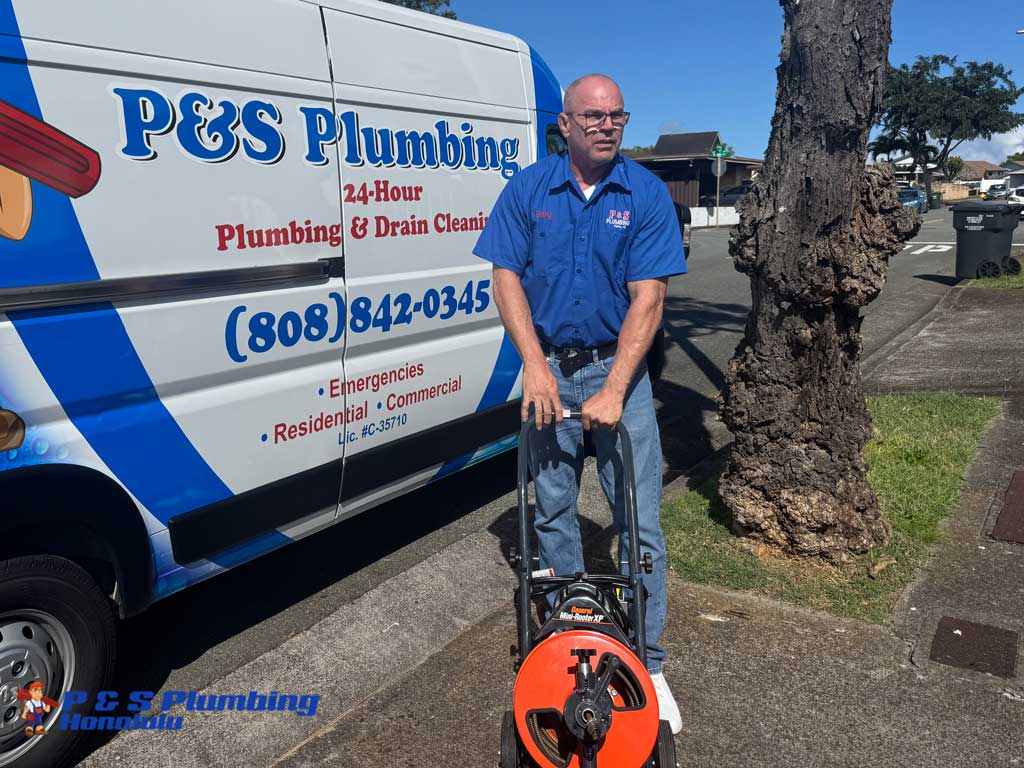
The judgment comes in knowing when the symptom is pointing to something bigger. Repeated drain cleaning at the same location may suggest that clearing the line is only part of the answer. A leak that appears after another fixture is used may involve drainage rather than supply. A water heater issue may require looking beyond the most obvious component. Sewer line repair may involve city review and permitting processes because Honolulu wastewater guidance emphasizes protecting sewer infrastructure and ties sewer connection and wastewater issues to public review.
A plumber should not inflate a small repair into a major project without evidence. At the same time, a responsible plumber should not pretend repeated failures are normal. The best repair conversations include a short explanation of what was found, what was corrected, what could not be confirmed without further investigation, and what signs would justify additional work.
For owners, the most useful habit is documentation. Keep invoices, permit information where applicable, inspection records, and notes about recurring problems. If you call a plumber Honolulu property managers use for multiple buildings, a service history can shorten diagnosis. A technician who knows that a drain has been cleared three times in six months will think differently than one seeing it for the first time.
Maintenance is not glamorous, but it protects the budget
Maintenance rarely feels urgent, which is why it is easy to postpone. Yet maintenance is often the difference between a planned service call and an expensive disruption. Plumbing systems operate quietly until they do not. Valves age, drains accumulate buildup, fixtures loosen, water-heating equipment requires attention, and small leaks can remain hidden until damage becomes visible.
For homeowners, maintenance can be as simple as periodic inspection of visible piping, fixture connections, shutoff valves, and water-heating equipment. For commercial properties, maintenance should be more formal. The more people using a building, the more stress placed on fixtures, drainage, and hot water systems. Restaurants, offices, retail properties, multifamily buildings, and other commercial spaces may have very different plumbing loads, but they all benefit from predictable service routines.
A commercial plumber can help identify which parts of a system deserve scheduled attention. Drain cleaning may be preventive in some buildings and reactive in others. Leak detection may become important when there are signs of unexplained water use, stains, odors, or recurring dampness. Water heater repair and maintenance may be tied to tenant comfort, business function, or operating schedules. Sewer-related concerns should be treated carefully because of the city’s interest in protecting wastewater infrastructure.
Maintenance also creates a relationship before an emergency happens. When a plumber already knows the property, they can often respond more efficiently. They may know access points, prior repairs, equipment locations, and building constraints. That familiarity is hard to buy during a midnight crisis.
Residential versus commercial plumbing on Oahu
Residential and commercial plumbing share the same core principles, but the practical demands differ. In a home, the owner usually wants the issue resolved cleanly, safely, and with minimal disruption. Scheduling may revolve around family routines, access to bathrooms, laundry, cooking, and hot water. Communication is often direct with the homeowner.
Commercial plumbing adds more layers. The person authorizing the work may not be the person using the space. A property manager may coordinate with tenants. A business owner may need work done outside operating hours. A landlord may need documentation for records. If the project affects water service or larger development issues, the Honolulu Board of Water Supply or city permitting processes may enter the picture. Large commercial developments can require master plans and more complex capacity review, which is far beyond a simple repair call.
A commercial plumber should be comfortable with that environment. They should understand that a repair may need to be phased, documented, and coordinated. They should also be clear about what they can handle in-house and when engineers, city reviewers, or other licensed trades may be required. Overpromising is a common problem in construction and service work. The more complex the property, the more valuable honest boundaries become.
For small businesses, the right plumber can feel like a quiet part of the operations team. They help keep restrooms functional, water-heating equipment reliable, drains clear, and repairs compliant. They also know when a seemingly small project might affect permits, inspections, or water-service questions.
Permits, inspections, and the cost of doing it right
Permits can feel like paperwork, but they serve a purpose. Plumbing systems affect sanitation, potable water, drainage, safety, and public infrastructure. Honolulu’s requirements recognize that plumbing work is not isolated from the broader community. A private sewer issue, improper drainage connection, or poorly installed fixture can create problems beyond one property.
The City and County of Honolulu requires permits for a range of plumbing-related activities, including installing, removing, altering, repairing, or replacing plumbing, drainage piping, fixtures, gas appliances, and water-heating or water-treating equipment. That broad language is why owners should ask about permits early. The correct answer may depend on the exact scope, but the topic belongs in the conversation.
Inspections also matter. Where inspected work is involved, the authority having jurisdiction may verify that the work was performed by a licensed plumbing journey worker and/or contractor. That creates a chain of accountability. It protects the owner from hidden noncompliance and protects future occupants who rely on safe, functional plumbing.
Doing it right may cost more up front. It may also take longer than a shortcut. The trade-off is certainty. You get work that is aligned with code, performed by qualified people, and documented where required. For property owners who plan to hold, lease, finance, insure, renovate, or sell, that certainty has real value.
Common service categories and what to expect
Most calls to a plumber fall into a handful of categories, but the details vary widely. The label on the service truck does not tell the whole story. What matters is how the plumber approaches the problem and whether they recognize when the work touches regulated systems.
| Service need | What the plumber should clarify | Why it matters | |---|---|---| | Leak detection | Whether the leak involves supply, drainage, fixtures, equipment, or concealed piping | The repair path depends on the source and access | | Drain cleaning | Whether the blockage is isolated or recurring | Repeated stoppages may need further evaluation | | Water heater repair | Whether repair is suitable or replacement is involved | Replacement or related work may trigger permit and code requirements | | Sewer line repair | Whether city review, permitting, or wastewater considerations apply | Sewer work affects infrastructure beyond the property | | Commercial plumber services | Whether the job affects operations, water service, capacity, or inspections | Commercial work often requires coordination and documentation |
This table is not a substitute for a site visit. It is a way to frame the first conversation. If the plumber’s answers are specific, measured, and consistent with Honolulu’s licensing and permit environment, you are more likely dealing with a professional. If the answers are vague or dismissive, slow down before authorizing the work.
Red flags that deserve attention
Most plumbing contractors want to do legitimate work and leave the customer satisfied. Still, property owners should watch for warning signs, especially when the job is urgent or expensive.
- The plumber avoids questions about Hawaii licensing or says verification is unnecessary.
- The plumber dismisses permits for regulated work without asking about the actual scope.
- The estimate is vague about what is being repaired, replaced, removed, or installed.
- The plumber cannot explain who will perform the work or whether a licensed person is involved where required.
- The recommended solution ignores recurring symptoms, wastewater concerns, or water-heating equipment requirements.
A red flag does not always mean someone is dishonest. Sometimes it means the provider is not the right fit for the scope. A handyman-style repair may seem harmless until it involves plumbing systems covered by city code. When the work falls within regulated categories, use a licensed plumber.
Balancing urgency, price, and professionalism
Every owner balances three forces: how fast the work can happen, how much it costs, and how confident they are in the result. You usually cannot maximize all three at once. The cheapest plumber may not be available quickly. The fastest emergency plumber may not be the lowest cost. The most experienced commercial plumber may need time to review drawings, permits, or water-service issues before giving a firm proposal.
The right balance depends on the situation. If water is actively damaging property, response time matters most at first. Once the immediate issue is controlled, the permanent repair should be handled correctly. If you are planning installation or replacement, speed should not override code compliance. If you manage a commercial property, documentation and coordination may be just as important as the repair itself.
Good plumbers understand this. They do not treat every call the same way. They know when to stabilize, when to investigate, when to recommend permitting, and when to bring in additional review. That judgment is what separates a true professional from someone who only knows how to make a temporary fix.
Choosing a plumber Oahu property owners can keep using
The best outcome is not just one successful repair. It is finding a plumber you can call again. A reliable plumbing relationship saves time because the plumber learns the property, the equipment, the history, and the owner’s expectations. That is especially valuable for rental properties, commercial buildings, and facilities with recurring maintenance needs.
Start with licensing verification. Use Hawaii’s licensing resources to check status, expiration, and disciplinary history. Ask about experience with the service you need, whether that is drain cleaning, leak detection, water heater repair, sewer line repair, installation, maintenance, or commercial plumbing. Discuss permits before work begins, not after. Ask for clear documentation of the scope, especially when the work involves fixtures, drainage piping, gas appliances, water-heating equipment, or water-treating equipment.
A plumber near me search may help you build a shortlist, but the hiring decision should rest on qualifications, communication, and compliance. Honolulu’s plumbing rules exist for a reason. They help protect buildings, occupants, water systems, and wastewater infrastructure. The right plumber respects that framework while still focusing on the practical problem in front of you.
When plumbing work is done well, most people never think about it again. Water arrives where it should. Wastewater leaves safely. Fixtures work. Equipment performs. Businesses stay open. Homes stay comfortable. That quiet reliability is the point, and it starts with hiring a plumber who knows both the trade and the responsibilities that come with working on Oahu.
Name: P&S Plumbing
Address: 1714 Homerule St Bay 1, Honolulu, HI 96819, United States
Phone: 808-842-0345
Website: https://www.psplumbinghawaii.com/locations/honolulu/
Email: [email protected]
Hours:
Sunday: Open 24 hours
Monday: Open 24 hours
Tuesday: Open 24 hours
Wednesday: Open 24 hours
Thursday: Open 24 hours
Friday: Open 24 hours
Saturday: Open 24 hours
Time zone: Hawaii-Aleutian Time
Open-location code / Plus code: 84F8+HP Honolulu, Hawaii, USA
Map/listing URL: https://www.google.com/maps/search/?api=1&query=Google&query_place_id=ChIJl_3qEMhvAHwRtgTEMKE27zE
Embed iframe:
Socials:
https://www.facebook.com/psplumbinghonolulu/
https://x.com/PSPlumbingoahu
https://www.youtube.com/@PSPlumbingHonolulu/
https://soundcloud.com/p-s-plumbing-honolulu
P&S Plumbing provides plumbing services from its Honolulu location on Homerule Street.
The official Honolulu page lists drain cleaning, plumbing repairs, water heater repair, water heater installation, sewer line repair, and 24-hour emergency plumbing services.
P&S Plumbing serves residential and commercial customers across Honolulu and Oahu, including Kalihi, Kakaako, Ala Moana, Waikiki, Moiliili, Makiki, Manoa, Aliamanu, Aiea, Pearl City, Waipahu, Ewa Beach, Kapolei, Hawaii Kai, and nearby communities.
The Honolulu shop is listed at 1714 Homerule St Bay 1, Honolulu, HI 96819, near Kalihi and local routes serving central Honolulu.
The official website lists Hawaii State License Number CT-35710 and describes the company as licensed and insured.
Customers can contact P&S Plumbing for drain cleaning, hydro jetting, leak detection, water heater service, sewer line repair, fixture repair and installation, kitchen plumbing, bathroom plumbing, commercial plumbing, residential plumbing, and emergency plumbing needs.
For plumbing service in Honolulu and Oahu, call 808-842-0345 or visit https://www.psplumbinghawaii.com/locations/honolulu/
The public map listing uses plus code 84F8+HP Honolulu, Hawaii, USA and can help customers find P&S Plumbing near Homerule Street in Honolulu.
Popular Questions About P&S Plumbing
What does P&S Plumbing provide in Honolulu?
P&S Plumbing provides drain cleaning, plumbing repairs, water heater repair and installation, sewer line repair, hydro jetting, leak detection, fixture repair and installation, bathroom plumbing, kitchen plumbing, residential plumbing, commercial plumbing, and 24-hour emergency plumbing services.
Where is P&S Plumbing located in Honolulu?
P&S Plumbing is listed at 1714 Homerule St Bay 1, Honolulu, HI 96819, United States. The official website also lists the address as 1714 Homerule Street 1, Honolulu, HI 96819.
What phone number should Honolulu customers call?
The official Honolulu page and contact page list 808-842-0345 for Honolulu-Oahu service.
What is the email address for P&S Plumbing?
The email address is [email protected].
What are P&S Plumbing’s Honolulu hours?
The official Honolulu page and supplied listing show P&S Plumbing as open 24 hours a day, seven days a week, Hawaii-Aleutian Time.
Is P&S Plumbing licensed?
The official Honolulu page lists Hawaii State License Number CT-35710. Customers can confirm license status directly with the relevant Hawaii licensing authority before hiring.
Does P&S Plumbing offer emergency plumbing in Honolulu?
Yes. The official Honolulu page lists 24-hour emergency plumbing services for urgent plumbing issues.
Does P&S Plumbing handle water heaters?
Yes. The official Honolulu page lists water heater repair, water heater installation, tankless water heater installation, solar water heater installation, and traditional water heater installation.
Does P&S Plumbing provide commercial plumbing?
Yes. The official Honolulu page lists commercial plumbing services along with residential plumbing services.
How do I contact P&S Plumbing?
Call 808-842-0345, visit https://www.psplumbinghawaii.com/locations/honolulu/, or use the map URL: https://www.google.com/maps/search/?api=1&query=Google&query_place_id=ChIJl_3qEMhvAHwRtgTEMKE27zE. Social profiles: Facebook, X, YouTube, and SoundCloud.
Landmarks Near Honolulu, HI
Homerule Street: The street listed for P&S Plumbing’s Honolulu location and a practical reference point for finding the shop.
Kalihi: A central Honolulu area near Homerule Street with homes, businesses, warehouses, and local service routes.
Dillingham Boulevard: A major nearby corridor serving Kalihi, Iwilei, Honolulu Harbor, and surrounding business areas.
Nimitz Highway: A key Honolulu route connecting the airport, harbor, downtown, and central business districts.
H-1 Freeway: A major Oahu highway used to reach Honolulu neighborhoods and communities across the island.
Honolulu Harbor: A major commercial waterfront landmark near downtown and industrial service areas.
Daniel K. Inouye International Airport: A major transportation landmark west of central Honolulu and near key Oahu service routes.
Downtown Honolulu: A central business and residential district served by local plumbing contractors.
Chinatown Honolulu: A nearby historic district with restaurants, shops, apartments, and older plumbing infrastructure.
Iwilei: A nearby commercial and industrial area with warehouses, retail properties, and service businesses.
Kakaʻako: A growing residential, retail, and commercial district southeast of downtown Honolulu.
Ala Moana Center: A major Honolulu retail landmark and citywide reference point.
Waikiki: A major visitor, hotel, condo, and residential area within P&S Plumbing’s broader Honolulu service area.
Moanalua: A Honolulu community listed within P&S Plumbing’s broader Oahu service-area references.
Pearl Harbor area: A major Oahu landmark west of Honolulu and near residential and commercial service routes.
For drain cleaning, plumbing repairs, water heater service, sewer line repair, hydro jetting, leak detection, fixture installation, commercial plumbing, residential plumbing, or 24-hour emergency plumbing near these Honolulu and Oahu landmarks, contact P&S Plumbing at 808-842-0345 or visit https://www.psplumbinghawaii.com/locations/honolulu/